Emergency Fund Calculator
An Emergency Fund Calculator is a free online tool that helps you determine the exact amount of money you should keep in a safe, liquid account to cover unexpected expenses or job loss.
About this tool
An Emergency Fund Calculator is a free online tool that helps you determine the exact amount of money you should keep in a safe, liquid account to cover unexpected expenses or job loss.
Where to keep it: Keep this money in a separate Savings Account or a Liquid Mutual Fund. Do not put it in stocks or lock it in a 5-year FD.
How to use Emergency Fund Calculator
- Enter monthly expenses — Add your rent, groceries, EMIs, and utilities.
- Select job type — Choose salaried, business, or freelance.
- Add dependents — Enter how many people rely on your income.
- See target — View your minimum and ideal emergency fund amount.
Key features
- Calculates exact monthly survival cost
- Adjusts for job stability (6 to 12 months)
- Accounts for dependents
- Shows liquid fund goal
The Ultimate Safety Net
An emergency fund is the foundation of personal finance. Without it, a single medical bill or job loss can force you into high-interest credit card debt. It is the money that buys you peace of mind.
How Much is Enough?
The standard rule is 3-6 months of living expenses for salaried employees. If you have a variable income (freelancer/business), you need 9-12 months because your income is unpredictable.
Where to Keep It
Liquidity is key. Keep it in a separate high-yield savings account or a liquid mutual fund. It should not take more than 24 hours to access this cash.
Start Small
If saving 6 months feels impossible, start with a ₹10,000 goal, then 1 month, then 3 months. Even a small buffer prevents you from going into debt for minor emergencies.
When to Use It
Only use it for true emergencies: medical bills, essential home/car repairs, or sudden job loss. Do not use it for vacations or shopping.
Replenish Immediately
If you dip into the fund, make it your top financial priority to pay yourself back as soon as possible.
Pro tips
- Keep it separate from your daily spending account
- Automate a monthly transfer to your emergency fund
- Don't invest this money in the stock market
Common use cases
- Planning financial security
- Preparing for job loss
- Building a safety net
Frequently asked questions
What is an emergency fund?+
An emergency fund is a stash of cash set aside for unexpected life events like medical emergencies, job loss, or urgent home repairs.
How many months of expenses should I save?+
If you are salaried with a stable job, 6 months is recommended. If you are a freelancer or business owner, aim for 9 to 12 months.
Where should I keep my emergency fund?+
Keep it in highly liquid, safe instruments like a savings account, a sweep-in FD, or a liquid mutual fund. Do not invest it in equity or lock it in a 5-year FD.
Does an emergency fund include EMIs?+
Yes. Your emergency fund must cover your absolute survival needs, which includes your rent, groceries, utilities, and minimum loan EMIs.
Should I pause investing to build this fund?+
If you have zero emergency fund, prioritize it. Once you have at least 1 month of expenses saved, you can resume investing while slowly building the rest.
Can I use a credit card as an emergency fund?+
No. Credit cards are high-interest debt traps. An emergency fund must be your own cash.
Is this calculator free?+
Yes, 100% free.
How often should I recalculate this?+
Review it whenever your monthly expenses change significantly (e.g., new rent, new baby, new loan).
Need invoicing, billing & inventory?
Try ShopBill Pro — the full business software. Free plan available.
Related tools
📚 Read more about Emergency Fund
Guides and articles related to this tool.
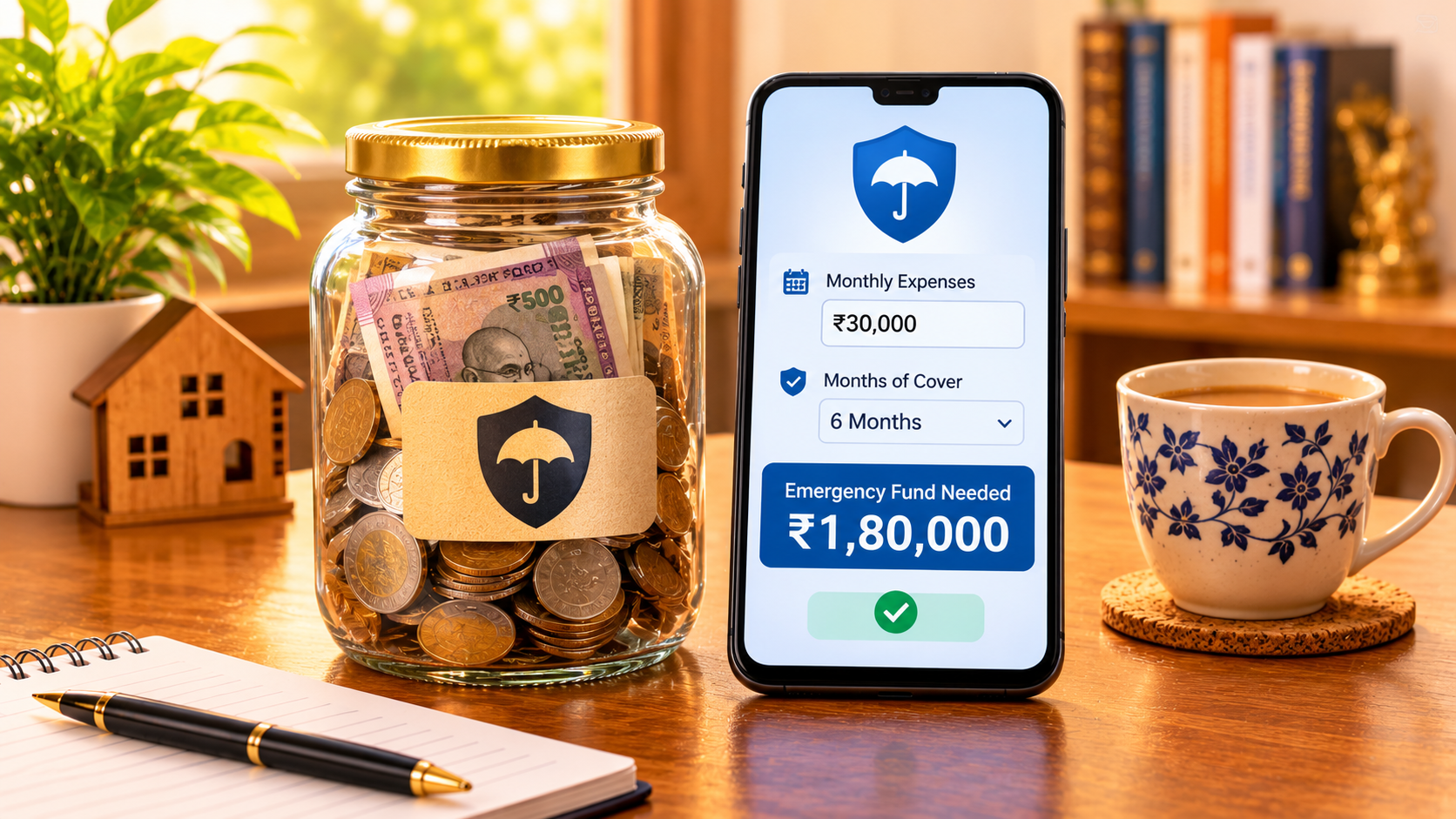
How Much Emergency Fund Do You Actually Need in 2026? (The 6-Month Rule)
If your monthly expenses are ₹30,000, you need an emergency fund of ₹1.8 Lakh. Here is the exact math, where to park the money, and how to build it fast.

How to Calculate HRA Exemption in 2026 (Free Calculator)
Complete guide to HRA exemption in 2026 — formula, metro vs non-metro rules, real examples, and mistakes that get people notices.

How to Calculate Trip Fuel Cost for Your Next Road Trip in India (2026)
Planning a road trip? A 600km trip from Mumbai to Goa can cost ₹4,500 in fuel alone. Here is the exact formula to calculate your fuel and toll costs before you leave.