AI Found a Critical Flaw That Took Down Government Websites (And SBI Just Got Hacked)
The ShopBill Pro Tools team builds free browser-based tools for Indian businesses, freelancers, and students. We write about finance, e-commerce, AI, and productivity — with practical, India-specific advice.
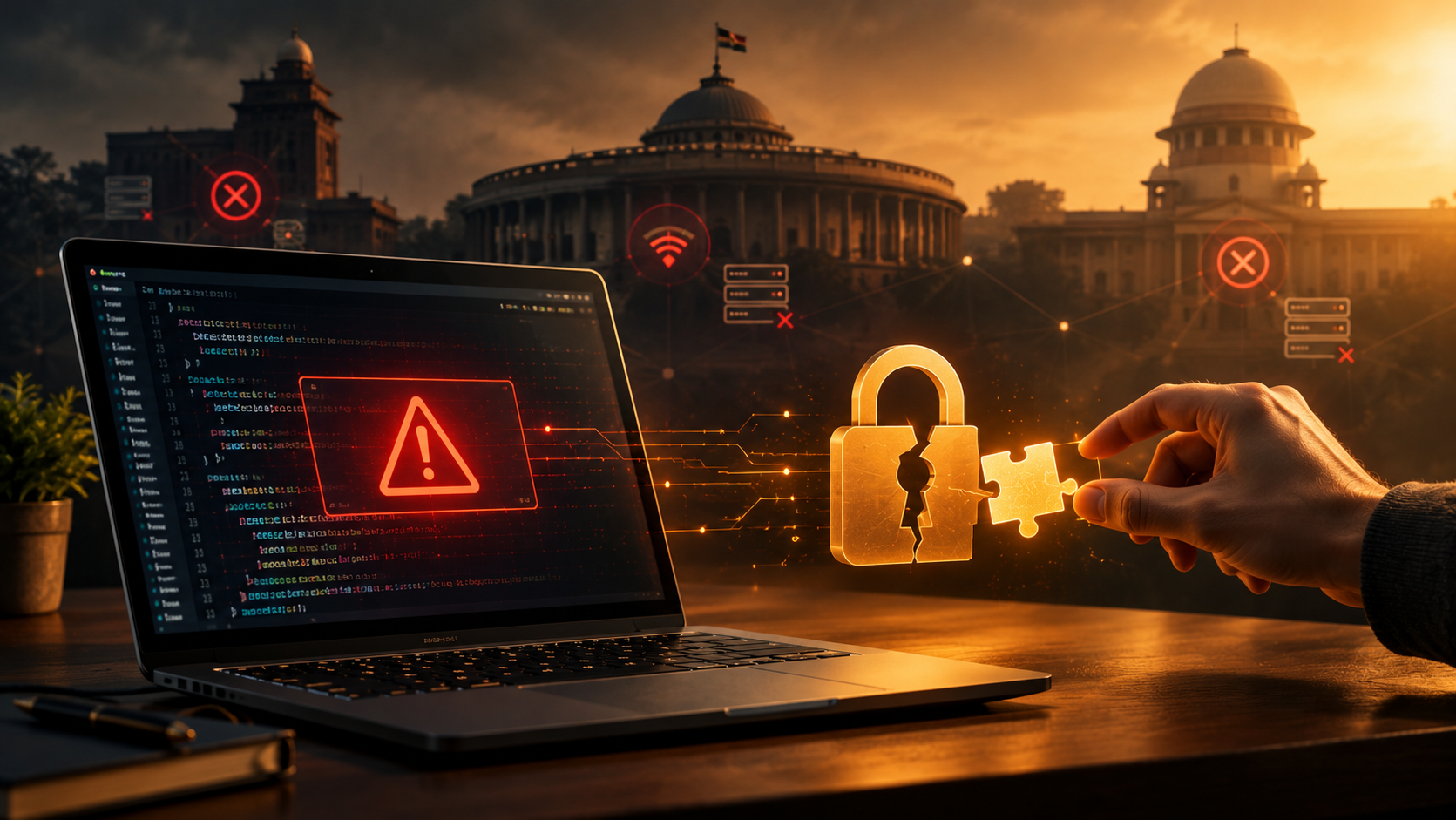
AI Found a Critical Flaw That Took Down Government Websites (And SBI Just Got Hacked)
I'm a hotelier. I don't run a website. But I check my bank statement every week. And when I read that India's largest bank had just confirmed a data leak — 3,897 customer records on the dark web — I checked mine twice.
This isn't a story about abstract AI research. It's a story about your data, your bank account, and your business. And it happened in the same week.
Here's what actually happened, in plain language.
The Global Story: AI Found a Flaw That Broke 70% of the Internet
On October 21-22, 2026, government websites across Europe and other regions went offline. Not because of a cyberattack. Because of a precautionary shutdown after AI discovered critical vulnerabilities in PHP — the programming language that powers roughly 70% of the internet[reference:0].
The bugs were collectively called PHP2Shell. They could allow attackers to hack into websites and read sensitive memory, including passwords[reference:1].
AI didn't just find one bug. It found a class of bugs — and it found them faster than humans could patch them. The number of vulnerabilities discovered in 2026 is on track to roughly double last year's record total[reference:2].
Translation: The same AI that helps you write emails is now finding security holes at a scale humans can't match. That's good for defenders. But it's also good for attackers.
The India Story: SBI Just Confirmed a Data Leak
On the same day, the State Bank of India (SBI) — the country's largest lender — confirmed that 3,897 customer records containing personally identifiable information had been found on the dark web[reference:3].
SBI said it received alerts on October 16 from its threat intelligence provider and launched an investigation. About 375,000 records were found on the dark web, and SBI identified 3,897 as containing personal information[reference:4].
What this means for you: If you have an SBI account, check your statements. Change your passwords. Enable two-factor authentication if you haven't already. Don't wait for the bank to tell you.
Why this matters beyond SBI: If India's largest bank can be breached, small businesses are even more exposed. Most small businesses don't have a security team. They don't have threat intelligence. They're running on hope.
Why AI Is Making Cybersecurity Worse (And Better)
Here's the uncomfortable truth: AI is a double-edged sword in cybersecurity.
| AI as a Defender | AI as an Attacker |
|---|---|
| Finds vulnerabilities faster | Exploits vulnerabilities faster |
| Automates patching | Automates attacks |
| Monitors for unusual activity | Creates convincing phishing emails |
| Scans millions of lines of code | Scans millions of websites for targets |
The PHP2Shell discovery shows the defender side. AI found the flaw before a human could. But the same capability exists on the attacker side. AI-powered hacking campaigns are already rapidly exploiting unpatched servers[reference:5].
The result: A race. Defenders use AI to find and fix flaws. Attackers use AI to find and exploit them. Right now, the defenders have the advantage — but only if they move fast.
What Normal People Should Do (Right Now)
I'm not a cybersecurity expert. But I am a small business owner who has to protect guest data, staff records, and my own bank accounts. Here's what I do — and what you should do too.
1. Change your bank passwords.
If you have an SBI account, change your password today. If you use the same password on other sites, change those too. Use a unique password for every account.
Use our Password Generator to create strong, unique passwords instantly. No signup.
2. Enable two-factor authentication.
Every bank, email, and social media account should have 2FA enabled. It's the single most effective thing you can do to protect your accounts.
3. Check your bank statements.
Look for transactions you don't recognise. Report anything suspicious immediately. Don't wait for the monthly statement — check weekly.
4. Don't reuse passwords.
If one site gets breached and you use the same password everywhere, every account is compromised. Use a password manager or generate unique passwords.
5. Be careful with links.
AI can write convincing phishing emails. If you get an email asking you to click a link and enter your password, don't. Go to the website directly.
6. Keep your software updated.
The PHP2Shell flaw affected unpatched servers. If you run a website or use software, update it. Patches exist for a reason.
What This Means for Small Business Owners
If you run a small business — a shop, a clinic, a hotel, a consultancy — you're a target. Not because you're big. Because you're small.
Small businesses are often the weakest link in the security chain. They have valuable data (customer records, payment info, employee details) but limited security resources. Attackers know this.
What you should do:
Don't store customer data you don't need.
If you don't need a customer's ID number, don't keep it. Less data = less risk.Use secure payment methods.
UPI QR codes are safer than sharing bank details over WhatsApp. Use our QR Code Generator to create a payment QR that doesn't expose your account number.Back up your data.
If your system gets compromised, a backup is your lifeline. Back up customer records, invoices, and staff data regularly.Train your staff.
Phishing emails often target employees, not owners. Teach your staff not to click suspicious links or share passwords.
Use our Invoice Generator to keep billing records digital and organised, and our PDF Compressor to store documents securely without bloating your storage.
The Other AI News You Might Have Missed
While the security crisis dominated headlines, the AI industry kept moving.
OpenAI models are coming to Google Cloud. In a surprising partnership, OpenAI will make its GPT-6 models and Codex coding agent available through Google Cloud's Model Garden — putting them alongside Google's Gemini and Anthropic's Claude[reference:6].
Anthropic launched Claude Duet. A proactive AI agent that works in the background, manages tasks, and identifies what you need without being asked. It's in research preview for Pro and Max subscribers[reference:7].
Nvidia is pushing Europe to accelerate AI adoption. Jensen Huang showed off AI-trained robot ducks on stage and urged European leaders to move faster on AI[reference:8].
The AI stock panic was overblown — for now. Rumours of forced liquidations in Chinese AI stocks were denied by exchanges, with only minor positions closed[reference:9].
Frequently Asked Questions
What is PHP2Shell?
A class of critical vulnerabilities in the PHP programming language, discovered by AI. It affects roughly 70% of the internet and could allow attackers to read sensitive memory like passwords[reference:10].
Did SBI get hacked?
SBI confirmed that 3,897 customer records with personal information were found on the dark web. The bank is investigating how the data leaked[reference:11].
Should I be worried about my SBI account?
Check your statements, change your password, and enable two-factor authentication. If you see anything suspicious, contact the bank immediately.
Is AI making cybersecurity better or worse?
Both. AI finds vulnerabilities faster, but it also automates attacks. The race is on — and defenders need to move quickly.
What can a normal person do?
Use unique passwords, enable 2FA, check bank statements regularly, and don't click suspicious links. Small steps make a big difference.
What should small business owners do?
Don't store unnecessary data, use secure payment methods, back up your systems, and train your staff to recognise phishing.
The Bottom Line
I'm a hotelier. I don't write code or run servers. But I do run a business, and I do have a bank account.
The AI-driven security crisis isn't abstract. It's happening now. Government websites went dark. SBI confirmed a leak. And the number of vulnerabilities is doubling year over year.
You can't control what AI finds or what attackers do. But you can control your own security. Change your passwords. Enable 2FA. Check your statements. Don't wait.
Try Our Free Tools
Protect your data and run your business safely — free, no signup:
- Password Generator — Strong, unique passwords
- QR Code Generator — Secure payment QRs
- Invoice Generator — Digital billing records
- PDF Compressor — Secure document storage
- ShopBill Pro — Secure billing for small businesses
All tools work in your browser — no signup, no upload.
Written by Vinay. I run a hotel, build tools in my spare time, and learn something new every day. This article is based on my real experience — not theory.
Need free tools while you read?
120+ free tools for Indian businesses - no signup required.
Related articles

How Much Emergency Fund Do You Actually Need in 2026? (The 6-Month Rule)
If your monthly expenses are ₹30,000, you need an emergency fund of ₹1.8 Lakh. Here is the exact math, where to park the money, and how to build it fast.

How to Calculate Trip Fuel Cost for Your Next Road Trip in India (2026)
Planning a road trip? A 600km trip from Mumbai to Goa can cost ₹4,500 in fuel alone. Here is the exact formula to calculate your fuel and toll costs before you leave.
ChatGPT Wallet: How AI Agents Spending Money Will Change Small Business
OpenAI just gave AI agents the ability to make purchases. Here is how the new ChatGPT Wallet works, the security risks, and what it means for your business billing.